


The crypto market often behaves like a seesaw, fluctuating between buyers and sellers.
When there are more sellers than buyers, the price falls. Conversely, during bullish times, when everyone is eager to buy new tokens and sellers are scarce, prices rise, driven by a fear of missing out (FOMO).
However, there is more complexity in the crypto market than this simple seesaw analogy suggests.
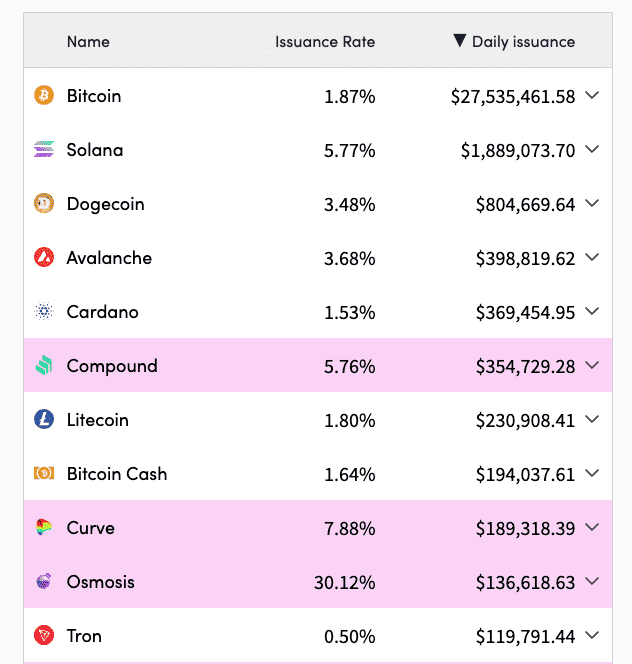
Even coins with a fixed supply, like Bitcoin, experience inflation. New demand must continually enter the market to push the price up, unless a coin is net deflationary.

Comparatively, traditional markets have steady inflows from sources like 401ks, monthly S&P 500 buys, and pension funds, which tend to push prices up by default, barring occasional downturns.
The issue with token issuance
Tokens are fundamentally different from stocks, and this often ends up disadvantaging investors.
The example of the perpetual future exchange dYdX illustrates the problem with token issuance. The inflation of its tokens, especially in early 2024 due to investor unlocks, team tokens, and other rewards, puts a downward pressure on price.

If new buyers don’t enter the market, the price per token could decrease significantly over time, resulting in losses for token holders.
The burn’ illusion
Founders sometimes promise to ‘burn’ tokens to reduce supply, aiming to increase demand. However, this often has no real effect on supply and demand.
For instance, the Binance exchange tokens (BNB) that were ‘burned’ were never actively in the market. The ‘buyback-and-burn’ models might temporarily impact the price but aren’t necessarily the best use of resources that could be directed towards research and development.

The logic behind unlocks
Unlocks, where tokens are released at different times or milestones, exist to incentivize developers and prevent them from immediately selling off tokens.
This mechanism requires careful planning and timing to be effective. A recent trend sees founders receiving tokens only after achieving certain performance milestones. Such conditions may help ensure that founders deliver results before benefiting from the tokens.
A shift toward traditional mechanisms
There’s a growing sentiment that the crypto industry should move towards functioning more like traditional technology sectors.
If founders and investors aim to attract retail capital, there needs to be a demonstration of good faith towards retail investors. This might mean fewer investor-subsidized incentives, leading to a focus on product-market-fit and profitability. Such a shift would likely be beneficial for everyone involved in the crypto market.
In conclusion, understanding the underlying mechanisms and strategies in the crypto market, such as token issuance and ‘burning,’ is crucial for investors to navigate the seesaw of crypto prices effectively.